During the Tourism of the Future 2025 Congress in Kołobrzeg, a panel discussion entitled “Model for supporting the new generation meetings industry” was held, which became one of the key points of the program. Experts agreed that although financial incentives remain an important element in the process of attracting events, the future of the industry requires building competitive advantage also based on non-financial values, such as academic potential, smart specializations of destinations, and long-term legacy for the community and economy.
The panel brought together experts representing various areas of the MICE industry – national and city convention bureaux, congress and exhibition centers, and industry associations. The discussion showed that the Polish meetings and events industry faces the challenge of creating a sustainable support model that would combine the expectations of organizers with real benefits for cities and regions. The conclusions of the debate pave the way for further work on developing systemic solutions to strengthen Poland’s competitiveness in the global MICE market.
From financial incentives to non-financial values
The panel participants emphasized that although financial incentives remain an important element in the process of attracting events, non-financial factors are becoming increasingly important, such as:
- the academic and scientific potential of the destination,
- smart specializations of cities and regions,
- and the legacy of events, i.e., lasting benefits for the community, economy, and scientific environment.
It was pointed out that these elements may, in the long term, determine the competitive advantage of Polish destinations on the international market.
Key conclusions
During the debate, experts discussed, among other things:
- the need to create new tools and programs to support destinations,
- the risk of a “spiral of incentives,” i.e., the danger of making the process of attracting events dependent solely on financial criteria,
- the importance of measuring the economic, social, and scientific value of congresses,
- the increasingly high demands placed on cities and regions by clients,
- ways to more accurately determine the return on investment (ROI).
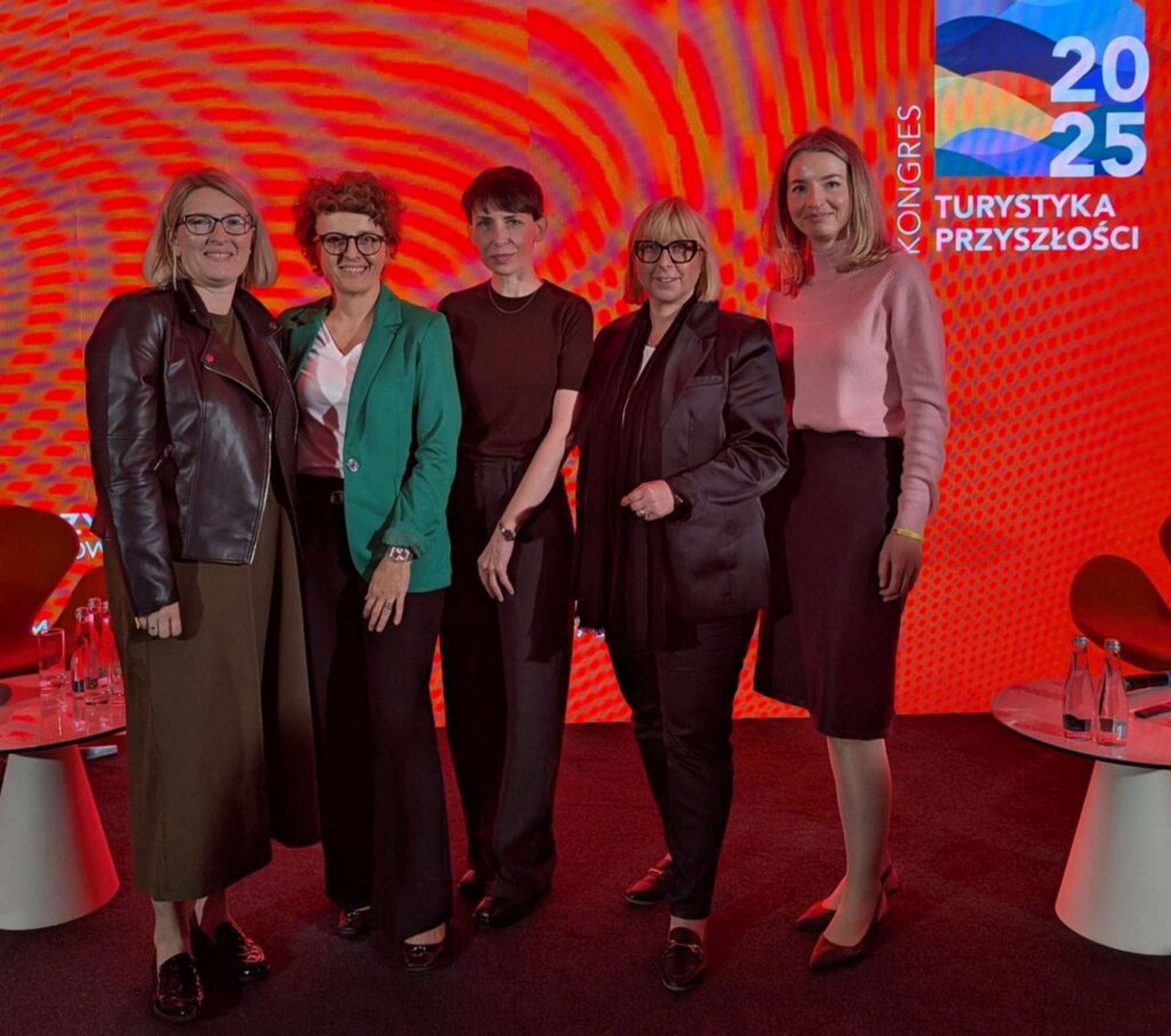
Statements after the panel “A new generation model for supporting the meetings industry”
At the Polish Tourist Organization, we understand perfectly well that building Poland’s image on the international stage is not just about standard advertising campaigns. We strive to make the implementation of cyclical programs to support the acquisition and organization of international meetings and events a key element of our strategy. Although we already have solid foundations (the National and Promotional Support Program), in order to fully exploit the intellectual, organizational, and infrastructural potential of our industry, we must also be ambitious financially. I dream of committing more funds to this goal. Why? Because supporting international events is an investment, not a cost. I believe that increasing financial involvement in these cyclical, targeted promotional programs will translate into measurable benefits for the entire country and allow us to reach the top of the global ranking, said Aneta Książek, manager of the Poland Convention Bureau – Meetings and Events Office of the Polish Tourist Organization.
In addition to new tools to support the acquisition of events, it is worth mentioning what we already use. I am referring to the Congress Ambassadors Program, which has been operating successfully since 1998. What is worth considering in this context, and what we are also trying to implement, is the search for Ambassadors not only in science, but also in culture, sports, and business. Sectoral support in attracting events is also important, added Agnieszka Szymerowska, president of the Conferences and Congresses Association (SKKP) in Poland.
Mega events are governed by slightly different rules. The experience of attracting the International Astronautical Congress shows that financial support is indeed important, but a broad public-private partnership proved to be crucial. We submitted our bid as a consortium of three entities: the MTP Group, The Way, and the European Space Foundation, with government support at the local, regional, and national levels. More and more scientific associations are also recognizing the value of legacy programs, which are becoming a tool for building the importance of a given scientific field in the region and thus developing membership, added Magdalena Hołowińska, coordinator for attracting international congresses at MTP Group.
In view of the increasingly frequent expectations of organizers, the priority should be to create systemic support for events aimed at industries that are considered key and strategic in a given destination. Such a mechanism would be helpful in building and developing local specializations, attracting investment, and strengthening the soft power of cities and regions, said Małgorzata Przygórska-Skowron, manager of the Kraków Convention Bureau.
Panel experts
Moderator:
- Magdalena Kondas, MeetingPlanner.pl
Panelists:
- Magdalena Hołowińska, MTP Group
- Aneta Książek, Poland Convention Bureau, Polish Tourist Organization
- Małgorzata Przygórska-Skowron, Krakow Convention Bureau
- Agnieszka Szymerowska, Association of Conferences and Congresses in Poland
Source, graphics, photo: Polish Tourist Organization